The science of lightning: myth vs. reality and how to stay safe
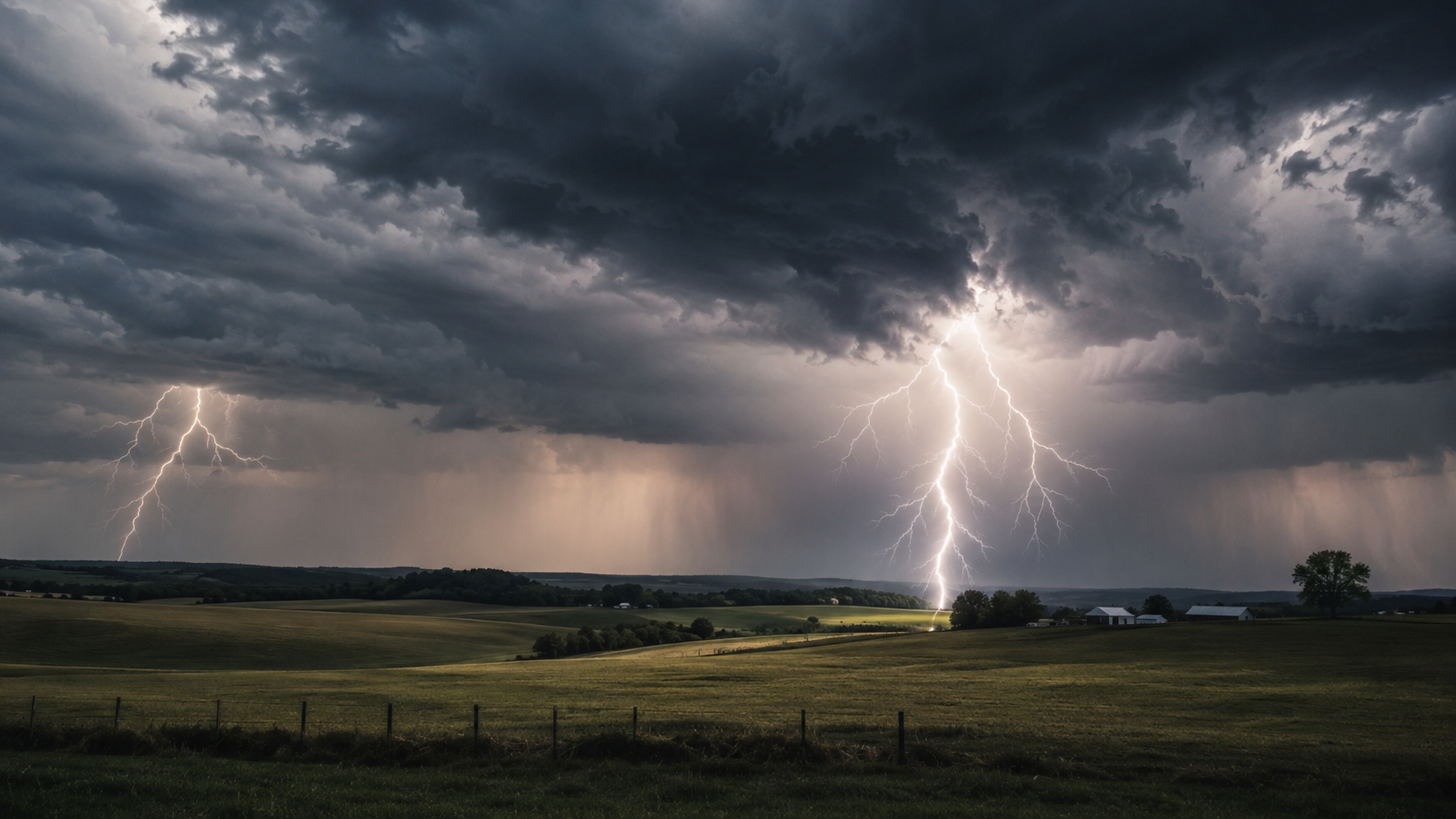
The sky darkens to a bruised purple, the air turns electric, and a distant rumble vibrates through your chest. Severe thunderstorms are an awe-inspiring display of nature's raw power. Yet, with every storm season comes a deluge of conflicting advice. Should you frantically pull every plug out of the wall? Is it truly dangerous to take a shower? Can a simple umbrella turn you into a human lightning rod?
To separate folklore from physics, we have to look at atmospheric science, electrical engineering, and medical data. Here is the comprehensive, science-driven breakdown of what actually happens during a lightning strike, alongside actionable safety protocols to protect your home, your electronics, and your life.
1. The Mechanics of a Strike: Is Lightning Always Fatal?
Statistically, the odds of being struck by lightning in a given year are roughly 1 in 1.5 to 3 million depending on regional geography and climate. Over the last century, mortality rates from lightning have dropped dramatically. This isn’t because lightning has become less lethal, but because modern society has shifted indoors. Industrialization transformed labor from outdoor agriculture to indoor office and factory environments, vastly reducing human exposure.
The Survivability Paradox
Contrary to popular belief, a lightning strike is not an automatic death sentence. In fact, medical data shows that roughly 70% to 90% of individuals struck by lightning survive. However, survival often comes with a lifetime of complex neurological and physical challenges.
When lightning hits a human, death is typically caused by immediate cardiopulmonary arrest. The massive electrical jolt acts as a cosmic defibrillator, completely disrupting the heart's natural pacemaker. If the heart muscle or the brain's respiratory center is paralyzed, death follows quickly unless immediate bystander CPR is initiated.
The Long-Term Physiological Toll
Those who survive a strike rarely escape unharmed. The injuries are categorizable into distinct categories:
- Internal and External Burns: Lightning can cross the skin via a phenomenon known as "flashover," where the current glides over the outside of the body, often vaporizing sweat and leaving intricate, fern-like reddish patterns known as Lichtenberg figures. However, if the current penetrates the body, it can cause severe deep-tissue internal burning.
- Neurological Damage: The human nervous system operates on delicate electrochemical impulses. A lightning strike floods this system with massive voltage, frequently causing short-term or permanent memory loss, sleep disorders, chronic pain, and peripheral neuropathy.
- Psychological and Behavioral Alterations: A well-documented phenomenon among lightning survivors is a profound shift in personality. Damage to the frontal lobe and neural pathways can trigger deep depression, severe anxiety, post-traumatic stress disorder (PTSD), and cognitive processing delays.
2. Seeking Shelter: The Physics of the Outdoors
When caught outside during a storm, your choices are dictated by the laws of electrostatics. Lightning is essentially a massive electrical current searching for the path of least resistance to neutralize the charge differential between the cloud and the ground.
The Danger of Lonely Trees
We have all heard the rule: never shelter under a tree. But why? Because a tree stands tall and is filled with moisture (sap and water), making it a much better conductor of electricity than the surrounding air. Lightning will frequently strike an isolated tree because it minimizes the gap between the cloud base and the earth.
If you stand underneath an isolated tree, you are exposed to two lethal phenomena:
- Side Flash: The lightning strikes the tree, but the voltage is so immense that it jumps (arcs) from the trunk to the nearby, lower-resistance human body.
- Ground Current: When lightning hits the tree, the electrical current dissipates outward through the ground. This ground potential rise can travel up one leg and down the other, a mechanism responsible for killing entire herds of cattle simultaneously.
The Forest Exception: Deep within a dense forest, the risk profile shifts. Because there are thousands of trees of similar height, the probability of lightning selecting the exact tree you are standing near is dramatically lower. While not perfectly safe, sheltering in a low-lying area of a thick forest is significantly safer than standing near a solitary tree on a plain.
Are Umbrellas Mini Lightning Rods?
The safety of an umbrella depends entirely on its structural composition. A plastic or fiberglass umbrella offers no heightened risk of attracting lightning, though it provides zero protection if you are the tallest object around. However, an umbrella with a central metal shaft and exposed metal ribs acts as an extension of your height. It can initiate an upward leader (the channel of positive charge that rises from the ground to meet the downward step leader from the cloud), marginally increasing your likelihood of being the strike point. If the sky turns violently active, drop the metal umbrella.
The Faraday Cage: Why Cars Are Safe Haven
There is a persistent myth that cars are safe during lightning storms because of their rubber tires. This is completely false. A lightning bolt that has just traveled through thousands of feet of air will not be stopped by a few inches of rubber.
Instead, a car protects you because of a principle discovered by physicist Michael Faraday in 1836: The Faraday Cage effect.
A vehicle with a fully enclosed metal body acts as a hollow conductor. When lightning strikes the car, the external electrical charge distributes itself entirely along the outside surface of the metal skin. The electric field inside the cage remains zero. The current flows down the body panels, jumps across the tires or rims to the wet asphalt, and dissipates harmlessly into the earth.
Note: This protection does not apply to fiberglass-bodied vehicles, soft-top convertibles, or open-air vehicles like golf carts and motorcycles.
3. Indoor Hazards: Showers, Smartphones, and Wall Outlets
Being indoors drastically mitigates your risk of a direct strike, but your home contains an interconnected web of conductive pathways that can bring the storm inside.
The Chemistry and Physics of Showers During a Storm
Can you take a bath or shower during a thunderstorm? Scientifically, the answer is a firm no.
If lightning strikes a house or a nearby utility pole, the immense current seeks any continuous path to the ground. Your home’s plumbing system provides an exceptional pathway. Metal pipes (copper or galvanized iron) are phenomenal electrical conductors. Even if your home features modern PEX or PVC plastic piping, the water flowing inside those pipes is loaded with dissolved minerals and ions (calcium, magnesium, sodium), making the water itself a highly effective conductor.
When you stand in a shower or soak in a tub, you are completely drenched in a conducting fluid while physically connected to the grounding infrastructure of your home. If a surge enters the plumbing, it can easily discharge through the water stream and into your body. Save the shower for after the storm passes.
Smartphones vs. Landlines
Using a mobile phone or smartphone during a storm is perfectly safe, provided it is not plugged into a wall charger. Cell phones communicate via radiofrequency waves, which do not create a physical conductive bridge to the lightning strike.
Traditional landline telephones, however, are major hazards. Hardwired telephone lines run along exterior poles and enter your home through physical copper wires. If lightning strikes a telephone pole miles away, the surge can travel down the line directly to the receiver pressed against your ear, causing catastrophic acoustic trauma or electrocution.
The Ultimate Question: Should You Unplug Your Appliances?
Yes, pulling the plugs is still the gold standard for protecting expensive electronics.
Many people assume that modern homes are naturally immune to power surges because of circuit breakers. This is a dangerous misconception. A standard circuit breaker or fuse box is designed to protect your home from sustained overcurrent conditions (like overloading an outlet). It cannot trip fast enough, nor does it have a wide enough air gap, to stop a lightning bolt traveling at millions of volts.
When lightning strikes your home or nearby power lines, it creates a massive voltage spike known as a transient overvoltage. This spike rushes into your electrical system, easily melting the sensitive silicon microchips inside your computers, smart TVs, and kitchen appliances.
While you can install whole-house Surge Protective Devices (SPDs) at your main electrical panel, these are designed to suppress smaller, distant surges. No consumer-grade surge protector can reliably stop a direct, localized lightning strike. Physical disconnection—unplugging the physical power cord from the wall—is the only 100% effective defense.

4. Complete Lightning Safety Protocol: Checklist & Actions
To maximize your safety, memorize these protocols and execute them the moment you hear thunder. (Remember the 30-30 Rule: If the time between a lightning flash and thunder is less than 30 seconds, seek immediate shelter. Stay inside for at least 30 minutes after the last clap of thunder).
Phase 1: Home and Infrastructure Preparation
- Secure the Perimeter: Close and lock all windows and exterior doors. Strong downdrafts can easily blow windows open, and keeping structural openings closed helps maintain structural integrity against pressure differentials.
- Tie Down Projectiles: Patio furniture, trampolines, and trash cans can turn into destructive airborne missiles in severe thunderstorm winds. Secure them or bring them indoors.
- Sever the Electronic Links: Unplug power, coaxial cable (cable TV), and ethernet lines from your desktop computers, gaming systems, routers, and television sets.
Phase 2: If Caught Outdoors with No Structural Shelter
If you are stranded in an open area with no buildings or cars available, your goal is to minimize your surface area and avoid becoming a lightning attractor. Follow these steps precisely:
- Adopt the Lightning Crouch: Squat down as low to the ground as possible. Place your feet tightly together, tuck your head down toward your chest, and cover your ears with your hands to protect your eardrums from the explosive acoustic shockwave.
- Minimize Ground Contact: Balance on the balls of your feet (your toes). Never lie flat on the ground. If you lie flat, you maximize your body's exposure to deadly ground currents. By keeping your feet tightly together, you ensure that if a ground current passes through your feet, the voltage potential difference between them is minimal, lowering the chance of current traveling up through your vital organs.
- Utilize Topography: If possible, crouch in a low valley, ditch, or ravine. Avoid high ridges, hilltops, or open flat plains.
- Distance from Conductors: Stay at least 10 to 15 feet away from metal fences, wire meshes, utility poles, bicycles, and golf clubs. If you are in a group, disperse! Keep a distance of at least 6 to 10 feet between individuals to prevent a lightning strike from jumping from person to person.
- Abandon the Water: If you are swimming, boating, surfing, or diving, exit the water immediately. Water behaves as a gigantic horizontal conductor; a strike anywhere near you will transmit voltage directly through the water to your body.
5. First Aid: What to Do If Someone Is Struck
If you witness someone getting struck by lightning, your rapid response can mean the difference between life and death.
The Cardinal Rule of Lightning First Aid: Victims of a lightning strike do not retain an electrical charge. They are perfectly safe to touch immediately. You will not be shocked or electrocuted by administering aid.
Emergency Step-by-Step Response
- Ensure Scene Safety: Assess the environment. If the area is actively dangerous, move the victim to a safer location (such as inside a vehicle or building) if possible. Lightning can strike the same place twice.
- Alert Emergency Services: Immediately call 112 (or your local emergency response number). Clearly state your location, that a person has been struck by lightning, and whether they are conscious or breathing.
- Assess Responsiveness and Respiration: Check for a pulse and breathing. Because lightning causes cardiac arrest, the victim may appear dead, blue, or cold. Do not give up hope.
- Initiate Immediate CPR: If the victim is not breathing or has no pulse, start Cardiopulmonary Resuscitation (CPR) immediately. Continuous chest compressions and rescue breaths keep oxygenated blood flowing to the brain until emergency medical technicians arrive with an Automated External Defibrillator (AED).
- Treat Secondary Injuries: If the patient is breathing, check for other injuries. Cool down any evident burns with clean water (avoid ice or heavy ointments), stabilize fractures caused by muscle spasms or falls, and treat the patient for shock by keeping them calm and warm.